News, 1 May 2026
News, 1 May 2026
Bank Holiday weekends can be dull. In order to alleviate your boredom we've used all of our skill in order to keep you occupied for 2' 15".
Years ago - literally - we started to think about an efficient means of providing a hand (parking) brake for D5910. It had to work, not be innovative, look like the original and be maintainable. We dismissed all of the modern ways of doing this - hydraulic, electric, spring apply, spring release, the whole lot. We settled on something which was all-but original. The handbrake on the original locos (and all other locos of that generation) was applied by turning a wheel in the cab which through a series of gears / chains / screws / levers and rods applied the brake blocks to the wheels. The problem we had was that the screw on the donor loco moved in the wrong direction, it moved towards the nose to apply the brake and we needed something which moved away from the nose to apply the brake. The only realistic solution was a new screw and trunnion, all mounted in the original frame and using the original levers / cranks and rods, albeit modified.
We've posted updates from time-to-time but for the first time the whole arrangement can be seen working in the video below.
Not only that, but the sandboxes have been test-fitted too. We won't be having working sanders (even BR gave up on them shortly after the original locos were introduced) but in our desire to recreate the 'as built' look of the locos we'll need something.
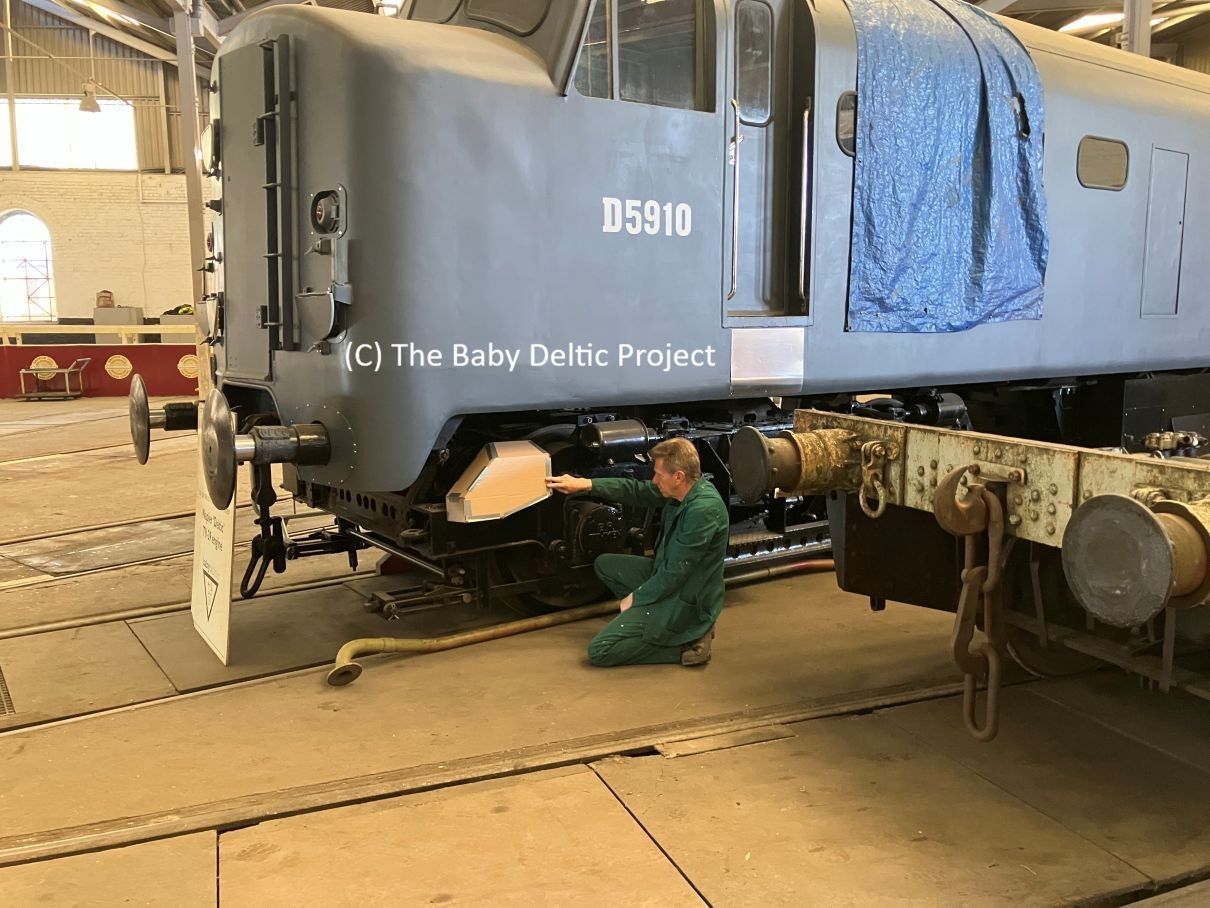
The something is seen below in true Cardboard Aided Design format. Despite all the work done on actual CAD there's no substitute for making sure it looks right on the actual loco before committing loads of money to laser cutting / bending and welding.
Here's Richard holding the cardboard sandbox in place for effect.
The actual sandboxes will be steel which, although heavier and less easy to cut with scissors, is more resilient and doesn't disintegrate when it rains.